Spot winged wonders in locations like sea stacks, salt marshes and evergreen forests.
Birding has become more and more popular across the country, with flocks of young people taking up the hobby in recent years. It’s easy to see why: Spending time in quiet waterside areas, observing life happen around you, is a way to restore peace and feel deeply relaxed.
The Southern Oregon Coast is the perfect place for birders to pursue their passion. It’s home to dozens of bird species. Although any time of year is a good time to bird-watch on the Coast, fall and winter provide visitors with plenty of raptors, ducks, seabirds and songbirds to admire as they spend the cold months along the ocean before migrating north to breed. Here are a few standout suggestions for places to visit with a pair of binoculars and a field guide.
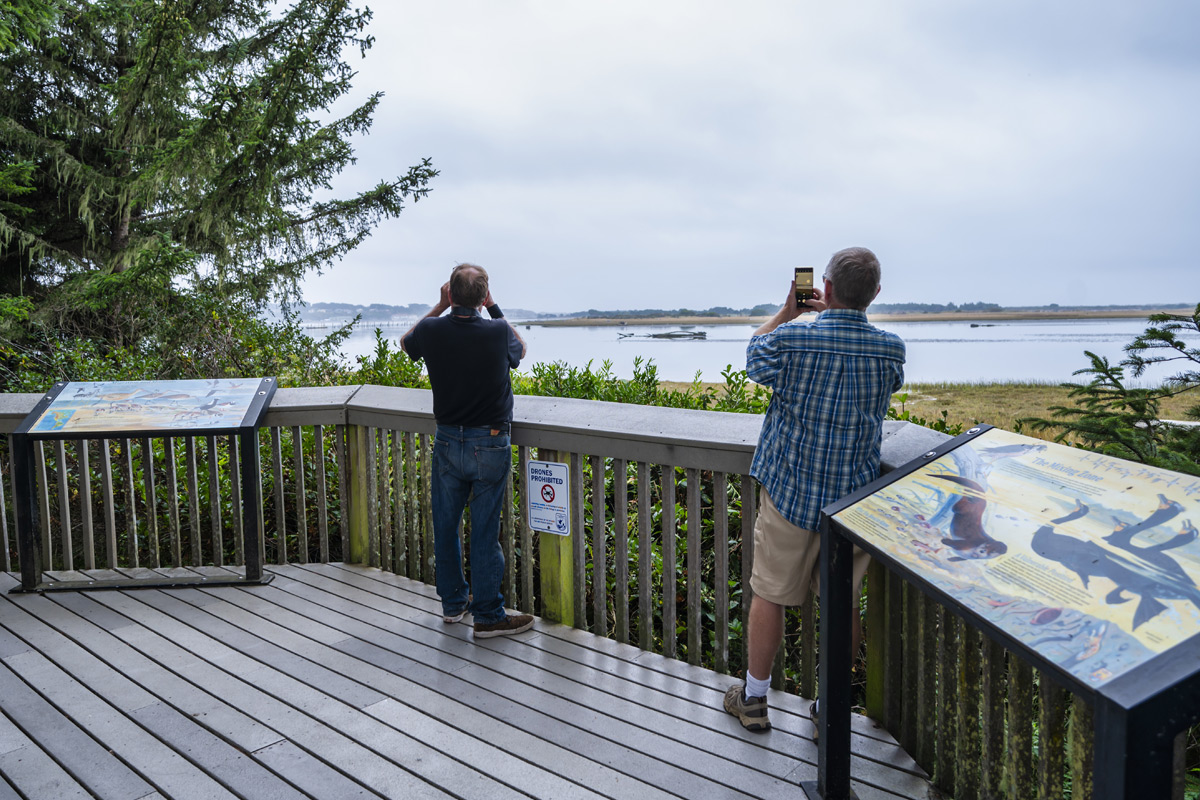
Bandon Marsh National Wildlife Refuge
Where fresh water meets salt water, estuaries are birding hot spots during spring and fall migration in April and August. Near the mouth of the Coquille River north of downtown Bandon, the Bandon Marsh National Wildlife Refuge is a haven for thousands of migrating shorebirds, like the Pacific golden plover and whimbrel, which feed and rest in the area’s extensive mudflats during both spring and fall migration.
Several easy trails overlook salt marshes and meander through Sitka spruce forests alive with warblers in spring. From late summer through winter, look for raptors like the white-tailed kite or red-shouldered hawk hunting in open fields. You’ll also see songbirds like the varied thrush, which looks like a fancy robin.
The refuge provides viewing platforms to scan the shallow, brackish water for ducks that spend fall and winter here: buffleheads, green-winged teals, northern shovelers and pintails. In summer a diversity of swallows — cliff, barn, tree, rough-winged, violet-green — dart above the water. The purple martin, North America’s largest swallow, can also be observed here. These birds arrive every spring from the Amazon basin to breed.
Cape Arago State Park
About 15 miles southwest of Coos Bay, Cape Arago State Park marks the beginning of the South Coast’s famous rugged shoreline that creates diverse habitat. Visitors can catch a glimpse of stunning harlequin ducks as they dive in the surf or rest on rocks. Males have ornate navy, auburn and white plumage.
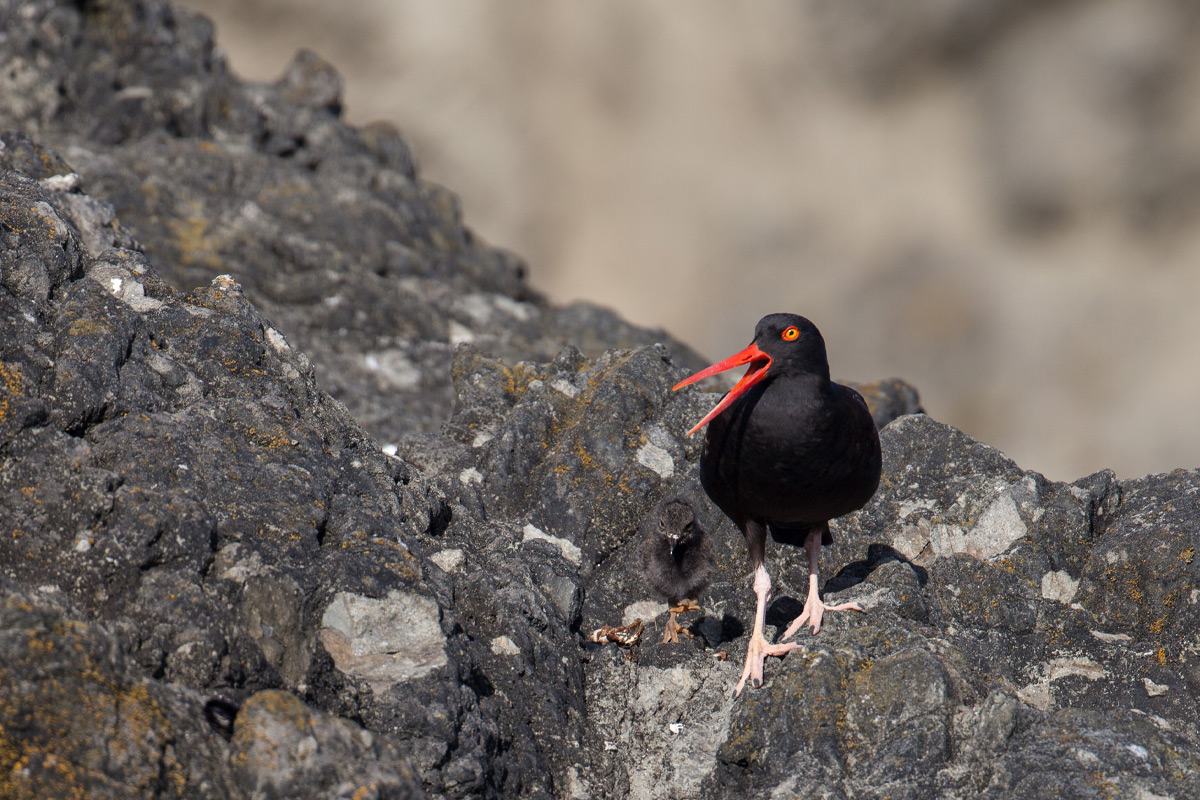
Another charming year-round resident is the black oystercatcher. The birds are often heard first with their shrill, stuttered calls. Watch for their neon-orange bills and long-legged silhouettes atop rocks.
Binoculars or spotting scopes bring what appears to be black dots bobbing on the surf into detailed view. Through the scope, you might see the football-shaped rhinoceros auklets with gray plumage and thick yellow-orange bills. Common murres, which look similar to penguins, can also be seen perched on sea stacks or floating on the waves.
About 13 miles south of Coos Bay, the South Slough National Estuarine Research Reserve protects 7,000 acres of tidal and freshwater wetlands and forest with plenty of options for hiking or kayaking. The handsome hooded merganser is a regular fall and winter resident. Males show off large black-and-white crests that contrast with striking yellow eyes and chestnut flanks. Look for the navy- and white-belted kingfishers hunting for fish, and listen for the squeaky calls or drumming of pileated woodpeckers. In summer you might hear the Swainson’s thrush’s metallic song spiraling through the conifers.
Gold Beach Marina and Rogue River South Jetty
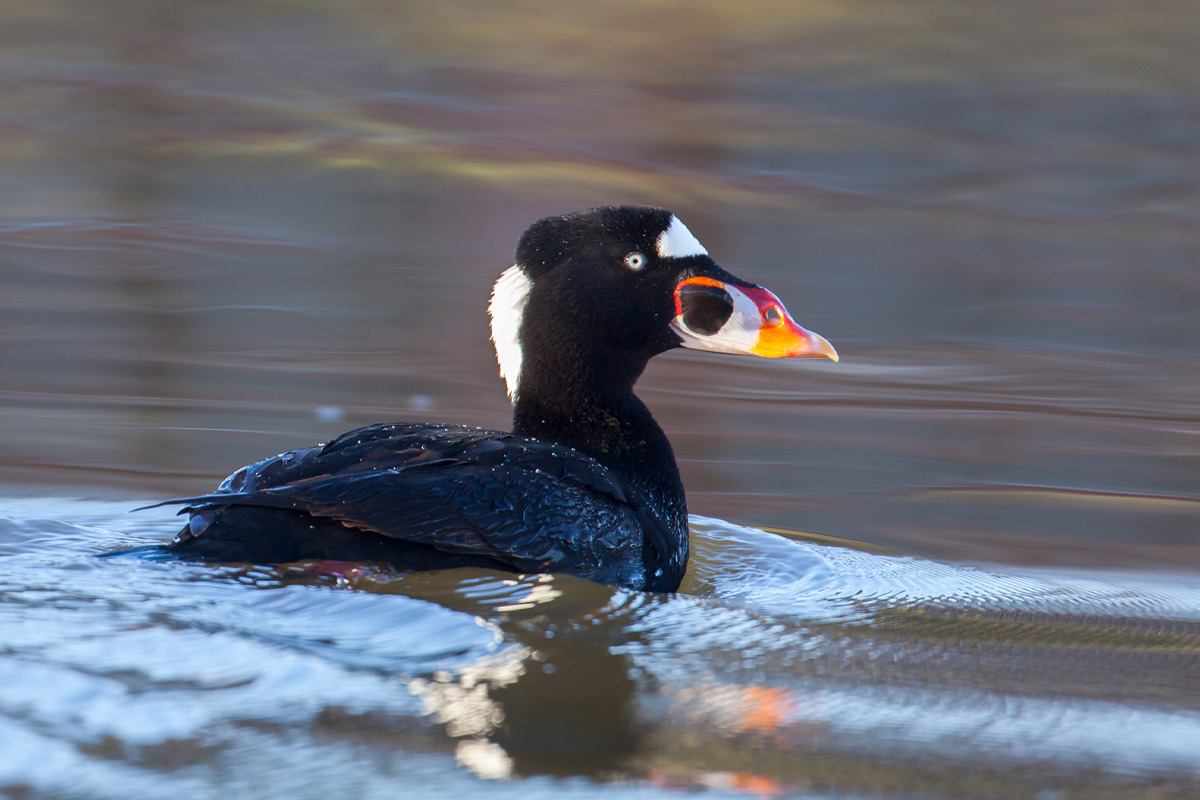
Not all good birding spots are in reserves. On the Coast, jetties and marinas are hot spots, like the Gold Beach Marina at the mouth of the Rogue River. Both the marina and the Rogue River South Jetty give observers close-up looks at grebes, loons and surf scoters, whose colorful orange, white and black bills typically go unnoticed when the birds are far from shore.
When you’re out observing, be sure to follow guidelines about beach and jetty safety, including never turning your back on the ocean, staying off jetties in rough weather and wearing sturdy footwear to avoid accidents on slippery rocks.
Tips for Beginning Birders
- Reference Oregon Department of Fish & Wildlife’s shorebird, seabird and raptor online guides, as well as the Oregon Coast Birding Trail’s guide to the South Coast.
- In addition to binoculars or spotting scopes, use an identification guidebook, like “Sibley Birds West,” or Sarah Swanson’s “Best Little Book of Birds: The Oregon Coast.” A bird-observation app like the Cornell Lab of Ornithology’s free Merlin Bird ID can help identify bird species through songs, as well as descriptions.
- To avoid disturbing birds, be quiet, move slowly and leave dogs at home. Be sure to stay behind fences and obey beach closures for nesting birds, including the federally threatened western snowy plovers.
Top photo by Manuela Durson
